

Jakub Matuśka
Evgeny Zakharov

Filip Suchecki
Łukasz Czajkowski
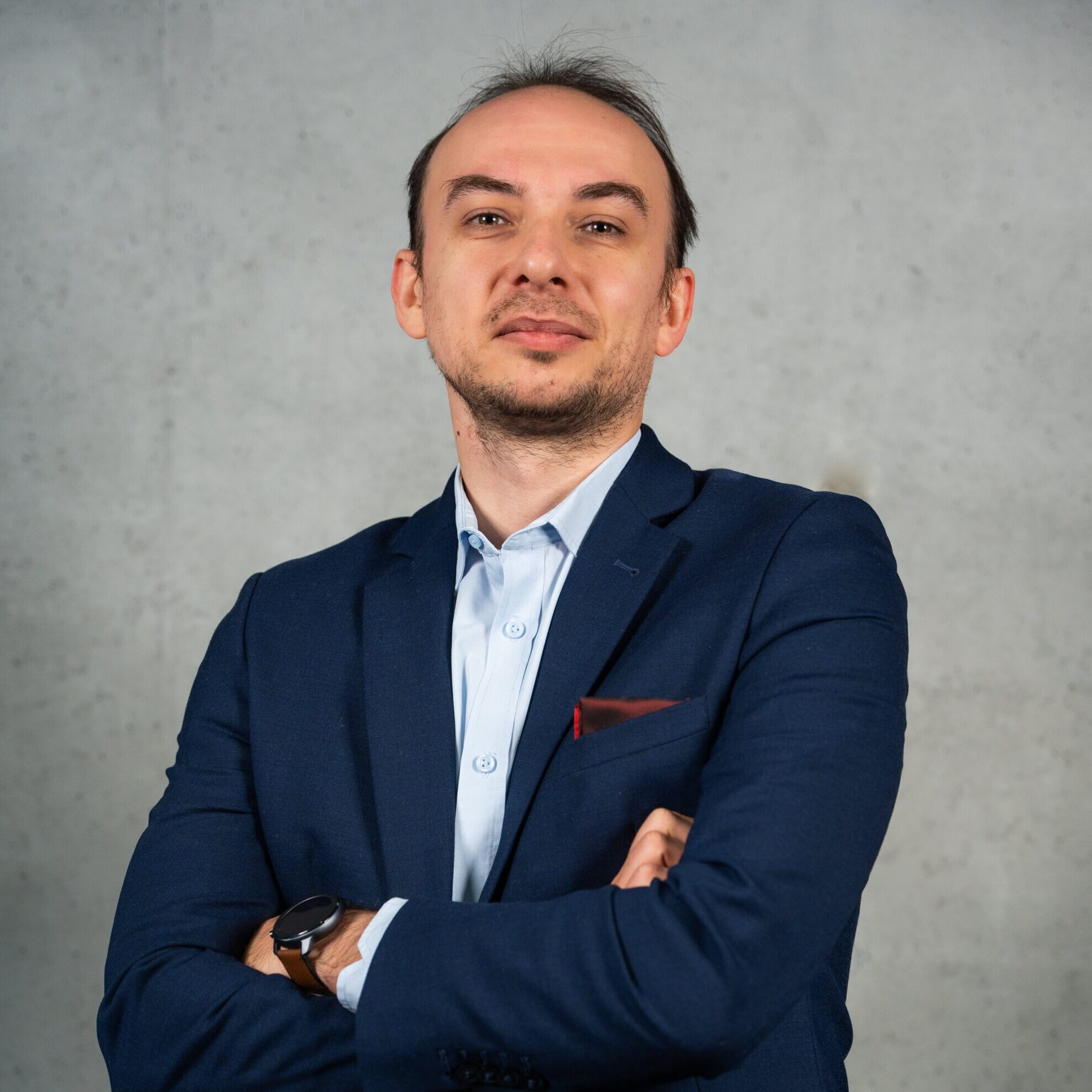
dr hab. inż. Filip Górski, prof. PP
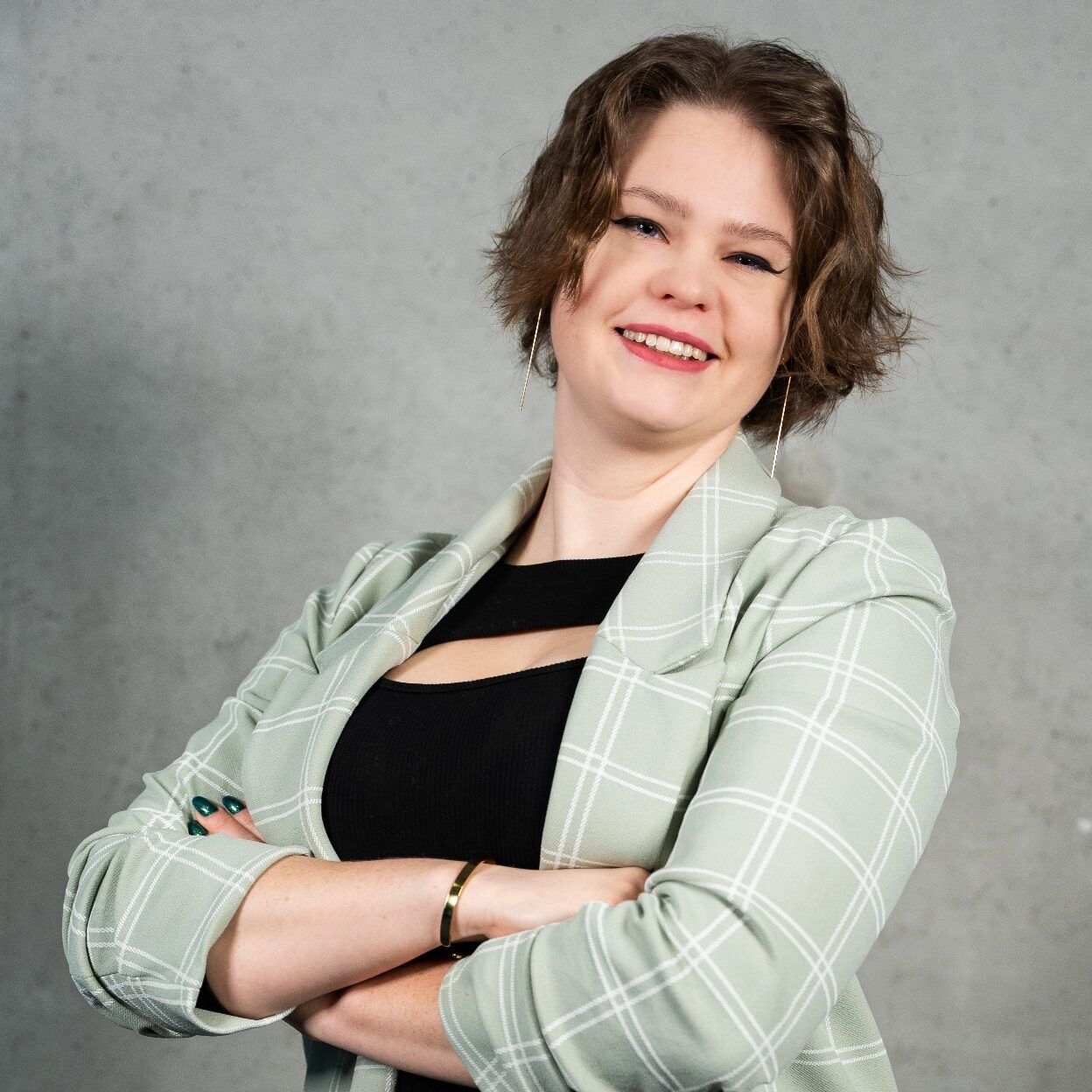
dr inż. Magdalena Żukowska

Paweł Buń
Jakub Gapsa

Emilia Smolarek

Błażej Gabryszewski
Paweł Zawadzki

Karolina Całka
BTS Da Vinci
See what we have prepared for you this year! Follow our social media to stay up to date!
neurorehabilitation
robotics
Human movement is a difficult thing to capture. Therefore, in this age of technological development, many movement analysis systems have been developed to enable its most accurate description. However, the problem lies in the high cost of these devices. Is it possible to carry out motion analysis outside of laboratory conditions and without expensive equipment? How do low-cost so-called markerless systems, based solely on digital image analysis and artificial intelligence algorithms, deal with this problem? How accurate can they be and for which applications are they best suited? This is what participants in this workshop will be able to test.
PL
TBA
Conducted by:
brain-computer interfaces
EEG
Can you control a game, spell a word or steer a virtual object using only your brain activity? In this workshop, you will find out by trying it yourself. Brain-computer interfaces (BCIs) are no longer confined to research laboratories, and this session will show how an EEG signal travels from the scalp to a working real-time application.
The workshop is predominantly hands-on. After a short introduction to EEG and BCI fundamentals, participants will put on Unicorn devices and record their own brain activity. They will learn to recognise typical EEG features, such as alpha rhythm, and to identify common artifacts that affect signal quality. Next, they will experience a range of real-time BCI applications, including neurofeedback and brain-controlled games, and see how different paradigms, such as P300-based communication, turn neural signals into commands.
Participants will also get a look behind the scenes of BCI development. Using the Unicorn Platform, they will explore the available APIs and example code, and modify them to change how an application responds to the user’s brain activity. The balance between neuroscience, coding and applications will be adjusted to the group’s interests. Whether you are curious about the underlying neuroscience, keen to write your first BCI code, or want to spend more time with ready-made applications.
No prior experience with BCIs is required. The workshop is for students, researchers, engineers and clinicians who want to see how brain signals can be transformed into practical solutions for neurorehabilitation, communication, assistive technologies and beyond.
PL | ENG
TBA
Conducted by:
laser cladding
prosthetics
TBA
PL | ENG
TBA
Conducted by:
OCD
intrusive thoughts
ERP
Obsessive-compulsive disorder is still widely misunderstood. For many people, OCD is associated with cleanliness, organisation, perfectionism or simply ‘liking things a certain way.’ In reality, OCD can involve distressing intrusive thoughts, images, urges and doubts that may focus on harm, relationships, sexuality, morality, religion, health and many other deeply personal themes.
This workshop will provide an accessible introduction to what OCD actually is, how the obsession-compulsion cycle works, and why compulsions are not always visible. Participants will explore the difference between intrusive thoughts and intentions, the role of uncertainty and reassurance in maintaining OCD, and why people experiencing taboo or frightening obsessions may feel too ashamed or afraid to seek help.
Drawing on lived experience, advocacy and real-world examples, the session will also examine the impact of common OCD stereotypes and the language we use when talking about mental health. It will highlight how misunderstanding OCD can contribute to stigma, delayed diagnosis and isolation, while accurate education and compassionate conversations can make it easier for people to recognise symptoms and access appropriate support.
The workshop will introduce evidence-based treatment principles, including Exposure and Response Prevention (ERP), while emphasising that recovery is not about eliminating intrusive thoughts or achieving complete certainty. Instead, it involves learning a different way of responding to doubt, discomfort and uncertainty.
Ultimately, the session aims to challenge participants’ assumptions about OCD and leave them with a more accurate, human and compassionate understanding of a disorder that is far more complex than the stereotypes suggest.
PL | ENG
18:30 – 20:00
Conducted by:
3D printing
orthotics
OrthoHandDesign is an opportunity to explore modern solutions for designing and manufacturing personalised hand orthoses using 3D printing technology. The programme will include 3D scanning, working with software that automatically designs orthoses based on a scan, and designing specialised cut-outs that enable targeted hand rehabilitation. Participants will also learn how to prepare an orthosis model for 3D printing, start the manufacturing process and post-process the printed model. It is a practical opportunity to become familiar with technologies that support the personalisation of orthopaedic and rehabilitation solutions.
PL | ENG
14:00 – 16:00
Conducted by:
VR
hand therapy
How can modern technology make hand rehabilitation more engaging? During the workshop, participants will be introduced to a game that supports hand rehabilitation and to the concept of gamification and its use in therapy. They will have the chance to complete several stages of therapy in one of three environments (sci-fi, fantasy or nature), discovering the practical potential of virtual worlds in the rehabilitation process. The workshop will also cover the differences between MR and VR solutions, providing a better understanding of the potential of both technologies in therapeutic applications.
PL | ENG
14:00 – 16:00
Conducted by:
segmentation
3D printing
Can you print an artificial brain? In this workshop, we will show you that you can, step by step. We will start with the basics of segmentation, the process of extracting structures of interest from medical data, in order to turn them into a three-dimensional model. Next, we will move on to the world of 3D printing. Participants will see how to create a casting mould from the prepared model. It won’t be just theory: we will show the printers, discuss materials and share tips on what to watch out for so that the print turns out as intended. Finally, the most exciting part: casting. Using the prepared moulds, we will create a scaled-down model of the brain. Everyone will see how a digital design turns into a physical object you can hold in your hand. This workshop is for anyone curious about how the world of data, engineering and a bit of creative fun come together, with concrete examples, hands-on practice and the satisfaction of making your own “brain”.
PL | ENG
15:00 – 17:00
Conducted by:
inżynieria powierzchni
biomimetyka
Can nature inspire modern biomedical engineering? The lotus leaf, shark skin and insect wings are examples of surfaces with exceptional properties resulting from their micro- and nanostructure. During the workshop, participants will learn how similar solutions can be reproduced using engineering methods based on laser surface texturing.
Participants will work with various material samples and see for themselves how topography affects surface properties. The programme will include contact angle measurements, topography analysis, observation of liquid-surface interactions, and assessment of heat emission and heat transfer.
Together, we will try to design and produce nature-inspired surfaces: hydrophobic, hydrophilic or heat-exchange-enhancing. The workshop will show how the right surface structure can give materials entirely new functions, relevant to fields such as implantology, diagnostics and modern medical devices.
PL | ENG
15:30 – 17:30
Conducted by:
TBA
TBA
PL | ENG
15:15 – 17:15
Conducted by:
biomechanics
baropodometry
Maintaining a stable body posture is a process that requires continuous cooperation between the nervous system and the musculoskeletal system. The assessment of balance and postural control often relies on observation and the physiotherapist’s experience, which may introduce a degree of subjectivity into the interpretation of results. Can modern measurement technologies provide a more objective assessment? What information can be obtained by analysing plantar pressure distribution and the trajectory of the centre of pressure (COP)? These are the questions participants will explore during this workshop by performing measurements using a baropodometric mat and analysing how quantitative data can complement clinical assessment, helping identify asymmetries and postural control impairments.
PL | ENG
17:30 – 19:00
Conducted by:
biomechanics
motion capture
Human movement is a difficult thing to capture. Therefore, in this age of technological development, many movement analysis systems have been developed to enable its most accurate description. However, the problem lies in the high cost of these devices. Is it possible to carry out motion analysis outside of laboratory conditions and without expensive equipment? How do low-cost so-called markerless systems, based solely on digital image analysis and artificial intelligence algorithms, deal with this problem? How accurate can they be and for which applications are they best suited? This is what participants in this workshop will be able to test.
PL | ENG
15:30 – 17:00
Conducted by: